


"Headless" comes up in almost every conversation about modern e-commerce. Agencies pitch it, platforms promote it and big brands talk about switching to it. If you run a small or mid-sized store, it is fair to wonder whether you are missing out.
Sometimes headless is exactly the right choice. Often it is an expensive answer to a problem you do not have. Here is what it actually means and how to decide.
What headless means
A traditional online store is a single system. The platform stores your products, runs your checkout and also generates the pages customers see, usually through a theme. Shopify themes and WooCommerce themes work this way.
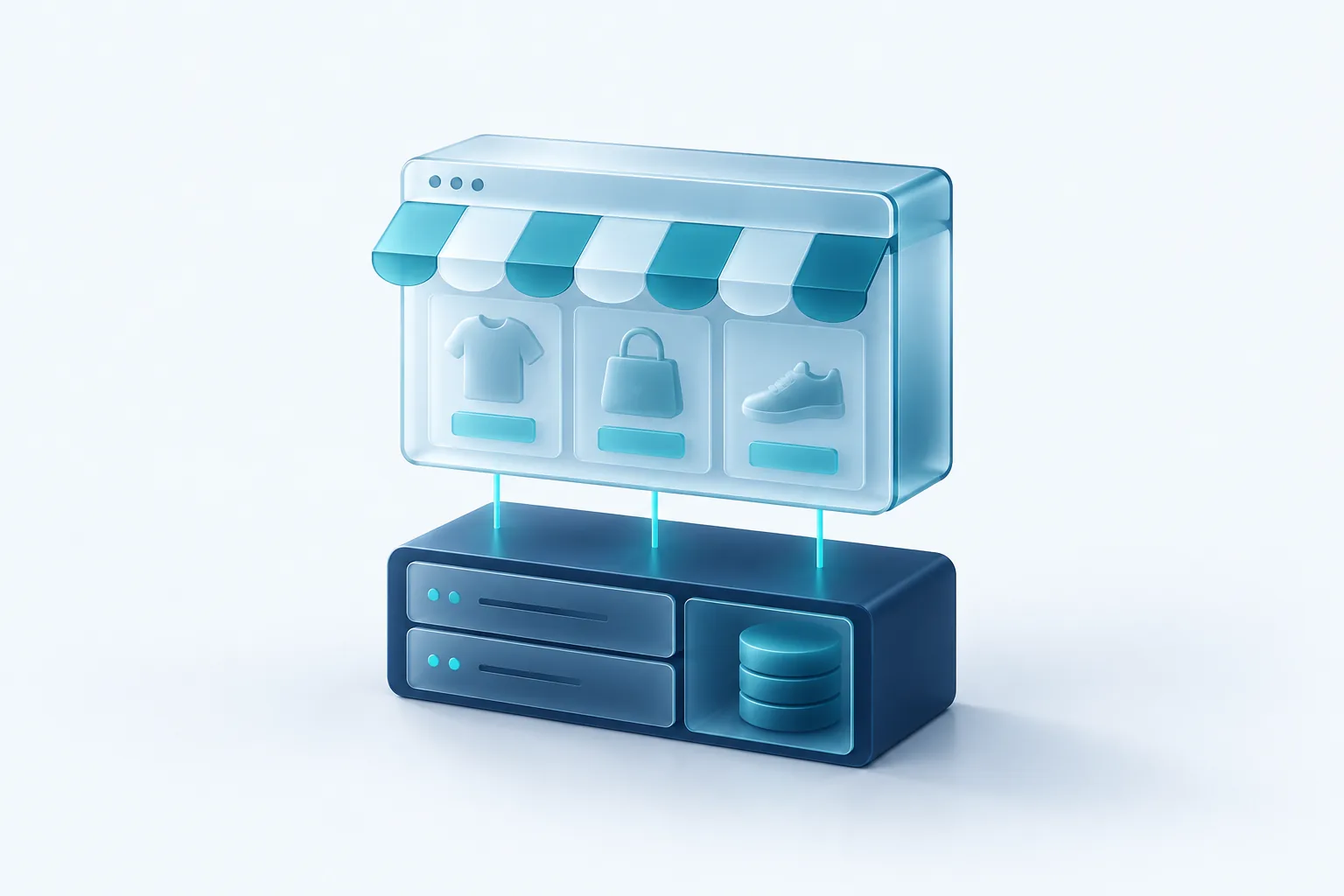
Headless commerce separates the two halves. The "head" is the storefront, the part customers see. The "body" is the commerce engine: products, prices, inventory, carts and orders. In a headless setup, developers build a custom storefront that talks to the commerce engine through APIs, which are structured ways for software to exchange data.
What headless setups look like
There are two broad flavours you are likely to hear about:
- Shopify as the engine with a custom storefront. Shopify offers Hydrogen, its React-based framework for headless storefronts, built on the open-source React Router framework. Hydrogen sites can be hosted on Oxygen, Shopify's hosting platform, which Shopify includes at no extra cost. You can also use other frameworks, such as Next.js, with Shopify's APIs.
- Composable platforms such as commercetools. These are API-first commerce engines with no built-in storefront at all. You assemble your stack from separate services for search, content, payments and more. This approach is often described by the acronym MACH: microservices, API-first, cloud-native and headless.
The real benefits
Headless gives you complete control over the customer experience. Your developers are not limited by what a theme allows. That matters when you need:
- A highly custom design or interactive experience that themes cannot support.
- Selling through several channels at once, for example your site, an app and a kiosk, all drawing on the same commerce engine.
- Commerce tightly blended with rich content from a separate content management system.
- Fine-grained control over performance and how every page is built.
The costs people underplay
With headless, you take on responsibility for the storefront. That has consequences that do not always appear in the pitch.
Your build costs more and takes longer, because developers are creating features a theme would give you for free. Many apps from platform app stores are designed to add features to themes, so they may not work out of the box on a custom storefront. Your marketing team may lose the drag-and-drop editing they are used to unless you add a content system. And every future change, from a new banner layout to a new payment option, likely needs a developer. You also own ongoing maintenance: framework updates, security patches and hosting.
Headless is a team commitment
A headless store is less like buying a product and more like running a small software project indefinitely. If you do not have in-house developers or a long-term development partner, factor that ongoing cost into the decision from day one.
When it is worth it and when it is not
Headless tends to make sense when your business has outgrown what themes can do, you sell across several channels from one catalogue, the customer experience is a genuine competitive advantage and you have the budget and team to keep developing it.
It usually does not make sense when you are still finding product-market fit, your catalogue is straightforward, your main problems are marketing or operations rather than storefront limits, or you are hoping it will fix a slow site. A well-built modern theme can be very fast, and a poorly built headless storefront can be slow.
There is also a middle ground. You can keep a standard Shopify theme for most of the store and build one custom experience, such as a product configurator, where it truly matters. Or you can move to a newer, more flexible theme and customize it properly before considering anything more drastic.
If you are unsure, ask anyone proposing headless to show you the total cost over three years, not just the launch budget. Include hosting, ongoing development, any content management system and the apps you would need to replace.
Our honest recommendation
Write down the specific things your current store cannot do and what each limitation costs you. If that list is short, or the items can be solved with theme work or an app, stay with a traditional setup and invest the difference in marketing. If the list is long and tied to revenue, headless is worth a serious look, ideally starting with a small, well-defined pilot rather than a full rebuild.

Written by Vishal Singh
Founder of Byte Harbor and a senior frontend and web platform engineer. He builds websites, custom software and AI automation for businesses across Canada and the US.
About Byte HarborRelated service
Shopify, WooCommerce and custom e-commerce development
A Shopify, WooCommerce or custom store that is easier to run and connected to the systems behind it.
Explore E-commerce

